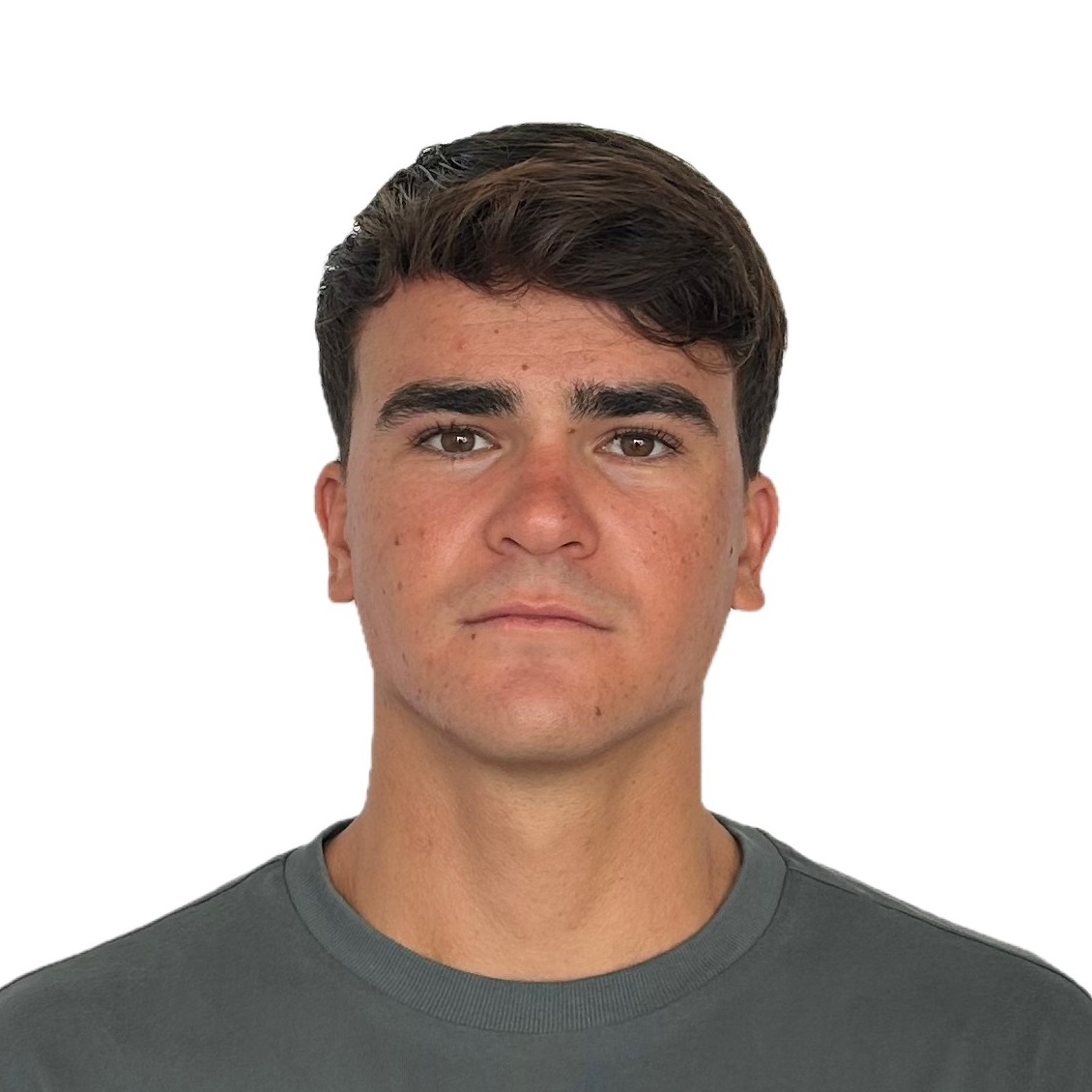
Who is Oscar?
I am a PhD candidate in Solar Physics, with research interest in innovative computational approaches to perform simulations, modeling and analysis of large volumes of data.
I have experience in magnetohydrodynamic (MHD) simulations, gravitational lensing, and computational methods (Python, AI/ML) for modeling and data analysis as key tools to understand complex phenomena, extract valuable insights, solve problems, and make predictions.
Research Experience (more here)
Currently I am pursuing a PhD at the Rosseland Centre for Solar Physics, based in Oslo.
Previously, I conducted a 6-month research project at the University of San Francisco under Porf. Xiaosheng Huang, in collaboration with Light Bridges (Tenerife, Spain). We obtained multi-epoch photometric follow-up of gravitationally lensed quasars with the Two-meter Twin Telescope facility (Tenerife) and performed time-delay-sensitive modeling with the GIGA-Lens code.
Earlier on, I developed a 3-month project at the Instituto Astrofísico de Canarias during the summer of 2024. We performed deep probing of umbral magneto-convection by analyzing observational data from the Gregor solar telescope and calculating the atmospheric profile through the inversion of spectropolarimetric signals.
Academic Background (more here)
In 2025 I attained my Master’s Degree in Astrophysics by the Universidad de La Laguna, Spain. During the two years it lasted I obtained broad knowledge in subjects ranging from Solar Physics to Cosmology, focusing on computational methods and theory. My Master’s Thesis research work focused on 2-dimensional MHD simulations of the impact of flares on prominences in the Sun with the MPI-AMRVAC code under Prof. Fernando Moreno-Insertis and Prof. Manuel Luna.
In 2023 I obtained my Bachelor’s Degree in Physics by the Universidad de La Laguna, Spain. During this period I gained general knowledge of Astrophysics and focused my Bachelor’s Thesis in the development of a python code to perform 1-dimensional MHD simulations under Prof. Fernando Moreno-Insertis.